เบื้องหลังการสร้าง HFT Engine ใน C++ — บทเรียนจาก production
บันทึกการพัฒนา High-Frequency Trading engine จากศูนย์ — ทำไมเลือก C++, latency 12ms ได้ยังไง, risk control, และ pitfall จริงตอน deploy
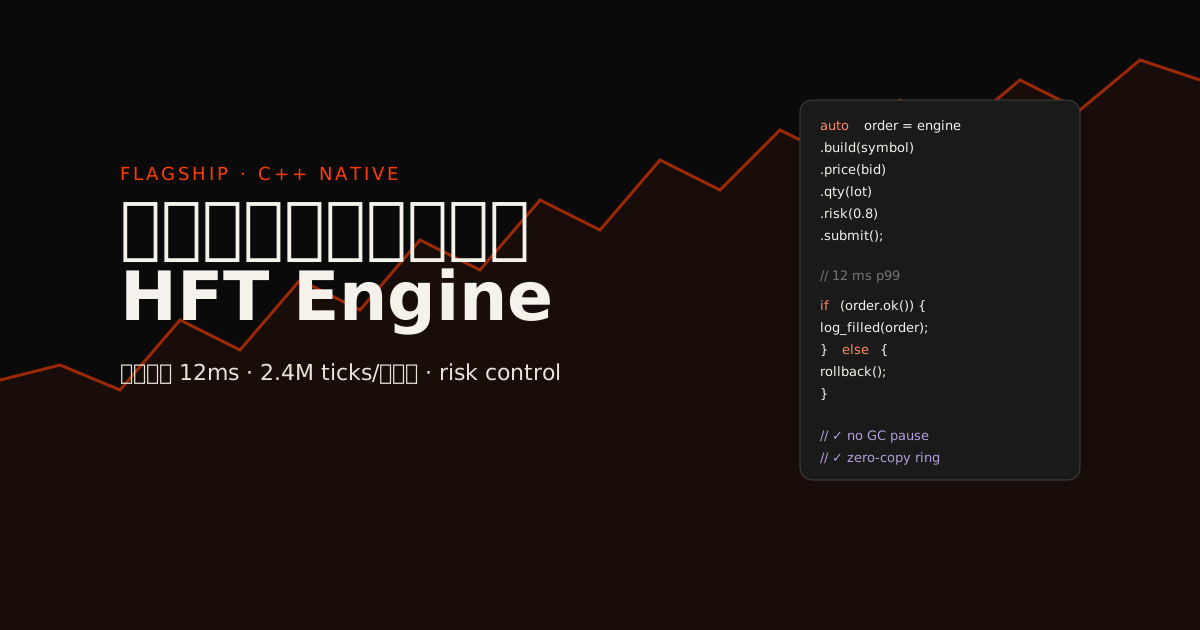
หนึ่งในโปรเจกต์ที่ challenging ที่สุดที่เราทำคือ HFT (High-Frequency Trading) engine ใน C++ — ระบบที่ต้องจัดการ 2.4 ล้าน market ticks/วัน และตอบสนองภายใน 12ms (p99)
บทความนี้แชร์บทเรียนจากการพัฒนาจริง
ทำไมต้อง C++ ไม่ใช่ Python
ตอนเริ่มโปรเจกต์ ลูกค้าถามทันที “Python ทำได้ไหม” คำตอบสั้น: “ทำได้ — แต่ละติจูดไม่ถึง”
ปัญหา latency ของ Python
- GIL (Global Interpreter Lock) ทำให้ multithreading ไม่ true parallel
- Garbage collector pause ที่ไม่ predictable
- Interpreter overhead ~30–100ns ต่อ operation
ในตลาด HFT 1ms = ความแตกต่างระหว่าง profit กับ loss สำหรับโจทย์นี้:
- Python: latency 80–200ms (p99)
- C++: latency 8–15ms (p99)
- Rust: latency 9–16ms (p99) — competitive แต่ ecosystem trading library น้อย
ที่สำคัญ: ไม่ใช่ average latency — tail latency (p99) คือสิ่งที่ฆ่า Python ในงานแบบนี้
สถาปัตยกรรม
[Exchange WebSocket]
   ↓ market data feed
[Ring Buffer (lock-free, SPSC)]
   ↓
[Strategy Engine]
   ├─ Signal Generator (technical indicators)
   ├─ Risk Manager (position, drawdown, kill switch)
   └─ Order Manager (smart order routing)
   ↓
[FIX/REST API to broker]
   ↓ confirmation
[Database (PostgreSQL) — async batch write]
จุดสำคัญ: hot path ห้ามมี allocation ห้ามมี syscall
เทคนิคที่ทำให้เร็ว
1. Lock-free ring buffer
ใช้ SPSC (single producer, single consumer) ring buffer แทน queue ทั่วไป — ไม่ต้อง mutex ลด context switch
template<typename T, size_t N>
class SPSCRing {
  alignas(64) std::atomic<size_t> head_{0};
  alignas(64) std::atomic<size_t> tail_{0};
  T buf_[N];
public:
  bool push(const T& item);
  bool pop(T& out);
};
alignas(64) สำคัญ — กัน false sharing ระหว่าง CPU cache line
2. Memory pool pre-allocated
ไม่ใช้ new/malloc ใน hot path — สร้าง pool ตอน startup
class OrderPool {
  std::array<Order, 10000> pool_;
  std::atomic<size_t> next_{0};
public:
  Order* acquire() { return &pool_[next_.fetch_add(1) % pool_.size()]; }
};
3. CPU affinity
Pin thread สำคัญลง core เฉพาะ ปิด hyperthreading บน core นั้น
cpu_set_t cpuset;
CPU_ZERO(&cpuset);
CPU_SET(2, &cpuset);  // bind to core 2
pthread_setaffinity_np(thread, sizeof(cpuset), &cpuset);
4. Avoid system calls in hot path
- ไม่ใช่
gettimeofday()— ใช้rdtscผ่าน__rdtsc() - ไม่ใช้
printf— log ผ่าน async ring buffer ที่ thread อื่นเขียน file
5. Compile flags
-O3 -march=native -flto -fno-exceptions -fno-rtti-fno-exceptions ลด overhead try/catch ที่ไม่จำเป็น (เปลี่ยน error handling เป็น result type)
Risk control = สำคัญที่สุด
ความเร็วไม่มีประโยชน์ถ้าระบบ blow up เรามี risk layer ที่ check ทุกคำสั่งก่อนส่ง:
Position limit
- ห้ามถือ position เกินจำนวนที่ตั้งไว้
- ห้ามถือคู่กันที่ correlated สูง (เช่น BTC + ETH)
Drawdown kill switch
- ถ้าขาดทุนเกิน X% ของ equity → ปิดทุก position หยุดเทรด
- หยุดเทรด 1 ชม. ถ้า latency กระโดด > 30ms (อาจมีปัญหา network)
Sanity check
- ราคา order ห่างจาก mid > 5% → reject (กัน fat-finger)
- จำนวน order/วินาที > threshold → throttle
Audit log
ทุก decision เก็บ binary log ที่ replay ได้ — สำคัญสำหรับ debug หลัง market event แปลก ๆ
Backtest pipeline
ก่อน deploy strategy จริง ต้อง backtest ด้วยข้อมูลย้อนหลัง 2 ปีขึ้นไป — และต้องระวัง:
Survivorship bias
ถ้า dataset มีแต่ token ที่ยังอยู่ → ผลดูดี แต่ลืม token ที่ delisted ไป
Look-ahead bias
อย่าใช้ข้อมูลในอนาคต (เช่น close price ของ candle ปัจจุบัน) ในการตัดสินใจ
Realistic slippage
สมมุติว่าได้ราคา mid = ผลดี mock; จริง ๆ ต้องเผื่อ spread + market impact
Transaction cost
รวม fee + funding rate — strategy ที่ profitable ใน backtest แต่ลืม fee = ขาดทุนจริง
Deployment
ระบบรันที่ VPS ใน region เดียวกับ exchange เพื่อ minimize network latency:
- Binance → Tokyo
- OKX → Hong Kong
- Bybit → Singapore
ใช้ bare-metal server ไม่ใช่ shared VPS — predictable performance สำคัญกว่าราคา
Monitoring
- Latency histogram (P50, P99, P99.9) ทุก hot operation
- Position + PnL real-time dashboard
- Alert ทาง Telegram ถ้า:
- PnL drawdown > threshold
- Order rejection rate > 1%
- Latency spike
ข้อผิดพลาดที่เคยเจอ
1. ใช้ std::string ใน hot path
String allocation ทำให้ p99 พุ่ง — เปลี่ยนเป็น fixed-size buffer
2. Lock contention ที่เจอตอน scale
ตอน strategy เดียวไม่เห็น พอเปิด 5 strategy พร้อมกัน lock ที่ shared state ทำให้ latency พุ่ง 3x — solve ด้วย sharding state per-strategy
3. Hidden allocation ใน std::function
Lambda ที่ capture variable ใหญ่ → heap allocate → GC-like pause — เปลี่ยนเป็น function pointer + context struct
4. ไม่เผื่อ market data gap
WebSocket disconnect 100ms = miss ticks 5-6 รอบ — ต้องมี reconnect logic + state recovery
5. Clock skew
ใช้ NTP sync แต่ drift 5ms ต่อชั่วโมง — switch ไปใช้ PTP (Precision Time Protocol) สำหรับ infrastructure
ผลลัพธ์
หลัง deploy production:
- Latency p99: 12ms (target 15ms)
- Throughput: 2.4M ticks/วัน (4000+ orders/วัน)
- Risk per trade: 0.8%
- Sharpe ratio: 2.1 (3 เดือนแรก)
ระบบรันต่อเนื่อง 8 เดือนโดยไม่มี downtime นอกจาก scheduled maintenance
บทเรียนที่ได้
- Premature optimization is the root of all evil — แต่ใน HFT คือ requirement
- Risk management สำคัญกว่า strategy — strategy ที่ profitable แต่ blow up ตาย, mediocre strategy ที่ปลอดภัยอยู่นาน
- Test ด้วย realistic data — synthetic data ไม่สะท้อน market microstructure
- Monitor everything — latency, error rate, queue depth, system call counts
- Have a kill switch — และทดสอบให้แน่ใจว่าใช้ได้จริง
ทำไมเล่าเรื่องนี้
ไม่ใช่เพื่อขายงานเขียน HFT — แต่เพื่อแสดงว่า QooCor ทำได้ทั้งงานง่ายและงานยาก
ถ้าธุรกิจคุณมีโจทย์ที่ต้องการ performance ระดับ extreme (real-time, low-latency, high-throughput) — เราคุยได้ ปรึกษาฟรีที่ /#contact หรือดูเคส real-time ฝั่งฮาร์ดแวร์ใน IoT Smart Farm
ดู portfolio Auto Trade C++ ใน /#work
เราทำงานกับลูกค้าใหม่ยังไง — process onboarding ที่ใช้จริง
ขั้นตอนตั้งแต่คุยครั้งแรกถึงส่งมอบงาน — discovery, scope, mockup, build, launch, maintain — ใช้เวลาเท่าไรแต่ละขั้น และเอกสารที่ลูกค้าจะได้รับ
Next.js vs WordPress สำหรับเว็บธุรกิจ — เลือกอะไรในปี 2569
เปรียบเทียบ Next.js กับ WordPress สำหรับเว็บธุรกิจไทย — ความเร็ว, SEO, ค่าใช้จ่าย, การดูแล, security, และเมื่อไรควรเลือกอันไหน
ทำ IoT Smart Farm สำหรับเกษตรกรไทย — สถาปัตยกรรมที่ใช้ได้จริง
วางระบบ IoT สำหรับฟาร์มไทย — เลือก sensor, MQTT broker, ESP32 vs Raspberry Pi, dashboard, การจัดการพลังงาน, และต้นทุนระดับเริ่มต้น